
Your Complete Guide to Orthodontics in Houston: What Mission Bend and Cinco Ranch Families Need to Know
"My dentist said my child needs to see an orthodontist—what does that even mean?"
"I've had crooked teeth my whole life. Is it too late to do something about it?"
"How do I know if my family needs orthodontic treatment?"
If you're a parent in Mission Bend, Pecan Grove, Meadows Place, or Cinco Ranch, you've probably heard the word "orthodontics" thrown around at dental appointments, school health screenings, or conversations with other parents. Maybe your child's dentist mentioned an evaluation. Maybe you've noticed your teenager becoming self-conscious about their smile. Or maybe you're an adult who's always wondered if you could finally fix the gap or crowding you've lived with for decades.
Let's break down everything about orthodontics—what it is, who needs it, when to start, and how to make the right choices for your family.
"What Exactly Is Orthodontics? Isn't That Just Braces?"
Orthodontics is a specialized area of dentistry focused on diagnosing, preventing, and correcting misaligned teeth and jaws. Yes, braces are part of it—but orthodontics encompasses much more.
What orthodontists (and orthodontic providers) treat:
Crooked or crowded teeth that overlap, twist, or don't have enough space to align properly.
Gaps and spacing issues where teeth are too far apart, creating aesthetic concerns and areas where food gets trapped.
Bite problems (malocclusion), including:
- Overbite: upper teeth extend too far over lower teeth
- Underbite: lower teeth protrude in front of upper teeth
- Crossbite: some upper teeth bite inside lower teeth
- Open bite: front teeth don't meet when the mouth closes
Jaw alignment issues that affect how your upper and lower jaws fit together, potentially causing pain, difficulty chewing, or TMJ problems.
The goal of orthodontic treatment isn't just a prettier smile (though that's a wonderful benefit). It's about creating proper alignment that improves oral health, function, and long-term well-being.
"Why Do Teeth Become Crooked in the First Place?"
If you're wondering why your child needs orthodontics when you brushed their teeth diligently since infancy, you're not alone. Misalignment happens for many reasons—most of which you couldn't have prevented.
Genetics plays the biggest role. If you or your partner had braces, there's a strong chance your children will need them too. Tooth size, jaw size, and bite patterns run in families. You can inherit your mother's small jaw and your father's large teeth—a recipe for crowding.
Early tooth loss creates problems. When baby teeth fall out prematurely (from decay or injury), neighboring teeth often drift into the empty space. When permanent teeth try to emerge, there's nowhere for them to go—they come in crooked or get stuck.
Childhood habits matter. Prolonged thumb-sucking, extended pacifier use past age 3, tongue thrusting, or mouth breathing can affect jaw development and tooth positioning. These habits apply pressure that slowly changes how teeth and jaws grow.
Injury or trauma to the mouth or jaw can shift teeth or affect growth patterns, especially in developing children.
Poorly fitting dental work like crowns or fillings that don't match your bite properly can contribute to alignment issues over time.
Sometimes there's no clear reason. Teeth simply don't come in straight, jaws don't grow proportionally, or biology creates problems despite doing everything "right."
The important takeaway: Needing orthodontic treatment doesn't mean you failed as a parent or neglected oral health. It's usually just genetics and development.
"At What Age Should My Child See an Orthodontist?"
The American Association of Orthodontists recommends that children have their first orthodontic evaluation by age 7.
Wait—seven? That seems young!
Most 7-year-olds won't get braces. But early evaluation identifies potential problems while they're easier to address.
What we're looking for at age 7:
Jaw growth patterns: Is the jaw growing proportionally? Are there signs of severe crowding or spacing issues developing?
Eruption problems: Are permanent teeth coming in properly, or are some blocked or impacted?
Harmful habits: Is thumb-sucking or tongue thrusting affecting development?
Crossbites or severe overbites: Some issues benefit from early intervention before all permanent teeth arrive.
Early treatment (Phase 1) makes sense for certain problems:
- Severe crossbites that affect jaw development
- Extreme crowding where permanent teeth have no room to emerge
- Protruding teeth are at high risk of injury
- Jaw growth issues that are easier to guide in younger children
More commonly, we recommend watchful waiting. We'll monitor development every 6-12 months and start treatment at the optimal time—usually between ages 11-14 when most permanent teeth have emerged, but growth is still happening.
The benefit of early evaluation: You have a plan instead of just wondering. You know what to expect, when treatment might start, and approximately what it will involve.
"My Teenager's Friends Are All Getting Braces—Is This the Right Time?"
Ages 11-14 represent the most common window for orthodontic treatment, and there are good reasons why.
Why this age is ideal:
Most permanent teeth have erupted. We can see what we're working with and create a comprehensive plan.
Growth spurts help. Active jaw growth makes tooth movement faster and more efficient. We can actually guide growth in favorable directions.
Maturity level. Most preteens and teens can handle the responsibility of braces care—brushing properly, avoiding forbidden foods, following instructions.
Social factors. Many classmates have braces at this age, making orthodontics feel normal rather than isolating.
Timing before major life events. Starting at 12-13 often means completing treatment before senior year, prom, graduation photos, and college applications.
But every child is different. Some 10-year-olds are ready; others should wait until 15. During your consultation, we'll assess your child's specific situation—dental development, maturity, and treatment needs—and recommend the best timing.
"I'm an Adult—Have I Missed My Chance?"
Absolutely not. One of the biggest myths about orthodontics is that it's only for children and teenagers.
Adult orthodontics is increasingly common for several compelling reasons:
Your teeth can move at any age. The biological process of tooth movement works at 25, 45, or 65—it just may take slightly longer than for teenagers whose jaws are still developing.
Life circumstances change. Maybe you couldn't afford treatment as a teen. Maybe your teeth shifted after you stopped wearing retainers in college. Maybe you're finally prioritizing yourself after years of putting family first.
Professional image matters. Fair or not, appearance affects career opportunities, client relationships, and first impressions. Many adults invest in their smile as they advance professionally.
Health concerns emerge. Crooked teeth are harder to clean thoroughly. As you age, the cumulative effects—gum recession, cavities in hard-to-reach areas, uneven tooth wear—become more problematic.
Major life events motivate change. Weddings, reunions, divorce and dating again, milestone birthdays—people often pursue orthodontics during life transitions.
Self-confidence matters at every age. If you've spent decades hiding your smile in photos or covering your mouth when you laugh, fixing that is life-changing, regardless of your age.
Modern orthodontic options like Invisalign clear aligners make treatment more discreet and comfortable for adults who don't want traditional metal braces.
"What Are My Orthodontic Treatment Options?"
Gone are the days when "braces" meant one thing—metal brackets and wires. Toda,y you have choices based on your needs, priorities, and budget.
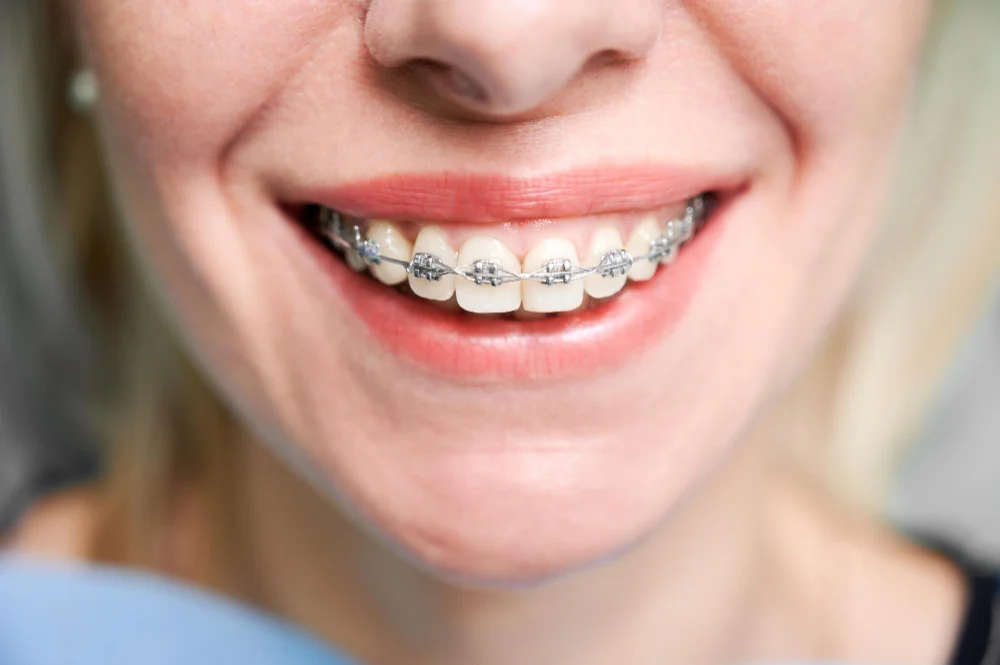
Traditional Metal Braces
These are the classic braces most people picture: metal brackets bonded to teeth, connected by archwires that are periodically tightened.
Best for:
- Complex alignment issues and severe bite problems
- Patients who want the most cost-effective option
- Kids and teens who aren't concerned about appearance
- Cases requiring precise control of tooth movement
Advantages:
- Most effective for difficult cases
- Typically faster treatment for complex issues
- Most affordable option
- Durable and virtually indestructible
- Can't be forgotten or lost
Considerations:
- Highly visible
- Food restrictions apply
- More cleaning required around brackets
- Can irritate cheeks and lips initially
Ceramic Braces
Function identically to metal braces but use clear or tooth-colored brackets that blend with your teeth.
Best for:
- Patients who want effective treatment with less noticeable appearance
- Older teens and adults concerned about aesthetics
- Cases too complex for clear aligners
Advantages:
- Much less visible than metal braces
- Same effectiveness for complex cases
- Fixed in place (no compliance concerns)
Considerations:
- Cost more than metal braces
- Brackets can stain if not properly cared for
- Slightly larger than metal brackets
- Same food restrictions as metal braces
Invisalign Clear Aligners
A series of custom-made, clear plastic trays that gradually shift teeth into position. Removable for eating and brushing.
Best for:
- Mild to moderate alignment issues
- Adults who want discreet treatment
- Patients who prioritize flexibility and aesthetics
- Those willing to commit to 20-22 hours daily wear
Advantages:
- Nearly invisible
- Removable for eating (no food restrictions)
- Easier to maintain oral hygiene
- Comfortable with no metal brackets or wires
- Fewer emergency appointments
Considerations:
- Requires strong self-discipline
- Not suitable for complex cases
- Typically costs more than metal braces
- Easy to lose if not stored properly
- More oral hygiene maintenance (brushing after every meal)
Which Option Is Right for You?
It depends on:
- The complexity of your case
- Your age and lifestyle
- Your budget and insurance coverage
- How important aesthetics are to you
- Your level of discipline and responsibility
During your consultation, we'll examine your specific situation and recommend the option most likely to deliver excellent results efficiently.
"How Long Does Orthodontic Treatment Actually Take?"
The question every patient asks—and the answer is always "it depends."
Typical treatment timelines:
Minor corrections: 6-12 months for small gaps or slight crowding
Moderate cases: 12-18 months for typical alignment issues and mild bite problems
Complex cases: 18-36 months for severe crowding, significant bite correction, or jaw alignment issues
Average treatment: Most patients wear braces or aligners for 18-24 months
What affects your timeline:
Severity of misalignment. Bigger problems take longer to fix. This shouldn't be surprising.
Age matters. Younger patients' teeth often move faster because jaws are still growing. Adult treatment may take a few months longer.
Treatment type. Some cases resolve faster with braces; others work equally well with aligners.
Compliance is huge. Patients who:
- Follow food restrictions
- Maintain excellent oral hygiene
- Wear rubber bands as directed
- Keep scheduled appointments
- (For Invisalign) wear aligners 20-22 hours daily
...finish on schedule or even early. Those who don't add months to treatment.
Biology varies. Some people's teeth simply move faster than others—it's not something you can control.
Growing patients need monitoring. Sometimes we complete "active" treatment but monitor growth for another 6-12 months to ensure stability.
We'll give you a realistic timeline during your consultation based on your specific case—not vague estimates.
"What Does Orthodontic Treatment Actually Feel Like?"
Let's set realistic expectations about discomfort, because everyone worries about pain.
Getting braces or starting Invisalign:
The placement appointment is painless—no shots, no drilling. You'll feel pressure and strange sensations as brackets are bonded or aligners fitted, but not pain.
The first few days:
Your mouth needs to adjust. Teeth will feel tender and sore as they begin moving—like a dull ache. Your lips, cheeks, and tongue need time to adapt to new hardware. This is the most uncomfortable phase.
What helps:
- Over-the-counter pain relievers (ibuprofen or acetaminophen)
- Soft foods (soup, smoothies, mashed potatoes, mac and cheese)
- Orthodontic wax to protect irritated areas
- Ice packs if needed
- Patience—it gets better quickly
After adjustment appointments:
Each time braces are tightened or you start a new set of aligners, you'll feel pressure for 1-3 days. But you adapt faster each time because your mouth knows what to expect.
Day-to-day life:
After the first week or two, most patients barely notice their orthodontics unless they're eating or cleaning. It becomes background noise in your life.
Occasional irritations:
A wire might poke out, a bracket might rub your cheek, or an aligner might feel tight. These are minor issues we can quickly fix.
The consensus from patients: Orthodontics is less painful than expected. The temporary discomfort is worth the permanent results.
"Can I Still Eat My Favorite Foods?"
This depends on your treatment type.
With traditional braces (metal or ceramic), you need to avoid:
Hard foods that can break brackets:
- Nuts and hard candy
- Ice cubes
- Hard pretzels and chips
- Whole apples and carrots (cut them into pieces instead)
- Hard taco shells
Sticky foods that get caught in braces:
- Caramel and taffy
- Gum
- Gummy candies
- Sticky rice
Chewy foods that pull on brackets:
- Bagels and thick breads
- Licorice
- Tough meat (opt for tender cuts)
Foods you bite into directly:
- Corn on the cob (cut kernels off first)
- Whole apples (slice them)
- Sandwiches with hard baguettes
You CAN still enjoy:
- Pizza, pasta, soft tacos, and sandwiches on soft bread
- Most fruits and vegetables (just cut hard ones into pieces)
- Soft cookies and cakes
- Ice cream, yogurt, pudding
- Chicken, fish, ground beef, eggs
- Cheese, beans, rice
With Invisalign:
You remove aligners before eating, so there are zero food restrictions. Eat whatever you want. Just brush before putting aligners back in.
The reality: Most braces patients adapt within a week and find the restrictions less limiting than anticipated. And the temporary sacrifice is worth straight teeth.
"How Much Does Orthodontic Treatment Cost in Houston?"
Cost varies significantly based on treatment complexity, type chosen, and treatment length. But let's talk realistic numbers.
General ranges:
Traditional metal braces: Typically the most affordable option
Ceramic braces: Usually 10-20% more than metal braces
Invisalign: Generally costs more than metal braces, comparable to or slightly above ceramic braces
What affects your specific cost:
- Severity and complexity of your case
- Treatment duration (longer treatment = higher cost)
- Type of orthodontics chosen
- Provider experience and location
Making orthodontics affordable:
Dental insurance: Most plans with orthodontic benefits cover a portion of treatment (often 50%) up to a lifetime maximum (commonly $1,000-$3,000 for children, sometimes less for adults). We work with all major insurance providers throughout the Houston area—MetLife, Delta Dental, Aetna, Humana, BlueCross BlueShield, Cigna, Guardian, and more.
Flexible financing: Monthly payment plans spread costs over time, making treatment manageable within most family budgets. Many providers offer 0% interest financing.
HSA/FSA accounts: Use pre-tax health savings dollars for orthodontic treatment, effectively reducing your cost.
Family discounts: If multiple family members need treatment simultaneously, ask about multi-patient discounts.
Transparent pricing: During your consultation, we provide a detailed cost breakdown with no hidden fees. You'll know exactly what you're paying before treatment begins.
Don't let cost assumptions prevent you from exploring options. Many families are surprised by how affordable orthodontics becomes with insurance and financing.
"What Happens After Braces Come Off?"
The exciting part—reveal day! But treatment doesn't completely end when brackets are removed or your final aligner is finished.
Retainers are non-negotiable.
Your teeth are held in position by ligaments and surrounding bone that have memory. Without retention, teeth naturally drift back toward their original positions—especially in the first year.
Types of retainers:
Removable retainers: Clear plastic trays (like Invisalign) or wire retainers that fit against your teeth. You can take them out to eat and for special occasions.
Fixed retainers: A thin wire bonded behind your front teeth, permanently holding them in place. Popular for lower front teeth that are most likely to shift.
Retention schedule:
First 3-6 months: Wear removable retainers full-time (20-22 hours daily), except for eating and brushing.
Months 6-12: Transition to nighttime-only wear.
Long-term: Most orthodontists recommend wearing retainers several nights per week indefinitely to maintain results.
Why this matters: We see patients who completed beautiful orthodontic treatment, then stopped wearing retainers after a year. Five years later, their teeth have noticeably shifted. Some need treatment again.
Retainers are your insurance policy protecting your investment. Wearing them is far easier than repeating orthodontic treatment.
"How Do I Keep My Teeth Clean During Orthodontic Treatment?"
Oral hygiene becomes more important—and more challenging—with braces. But it's manageable with the right routine and tools.
Daily care with braces:
Brush after every meal using a soft-bristled toothbrush at a 45-degree angle to clean around brackets. Take your time—3-5 minutes minimum.
Use an interdental brush (small Christmas tree-shaped brushes) to clean between wires and teeth where regular brushing can't reach.
Floss daily using floss threaders or orthodontic flossers designed to navigate around wires. This is tedious but essential.
Rinse with fluoride mouthwash to strengthen enamel and kill bacteria in hard-to-reach spots.
Consider a water flosser (like Waterpik) to blast away food particles around brackets. Many patients find this life-changing.
With Invisalign:
Remove aligners to brush and floss normally. Much easier than braces, but you need to:
- Brush after every meal before reinserting aligners
- Clean aligners daily with a soft brush and clear soap
- Carry a travel toothbrush for eating away from home
Why this matters:
Poor hygiene during treatment leads to white spots (decalcification), cavities, swollen gums, and bad breath. Patients who maintain excellent hygiene reveal beautiful, healthy smiles. Those who don't end up with permanent damage.
Make oral hygiene a priority from day one.
"What If Something Goes Wrong During Treatment?"
Orthodontic emergencies are rare, but minor issues happen occasionally. Here's what to do:
Poking wire: Use orthodontic wax to cover the sharp end, or carefully push it back with a pencil eraser. Call us if it's truly bothersome.
Loose or broken bracket: This usually doesn't hurt—just call us to schedule a repair appointment. If the bracket is still attached to the wire, leave it alone. If it comes completely off, bring it to your appointment.
Lost Invisalign aligner: Call us immediately. We'll advise whether to wear your previous aligner, move to the next one, or order a replacement.
Sore spots from rubbing: Orthodontic wax creates a protective barrier. Sore spots usually toughen up within a week.
General soreness: Over-the-counter pain relievers, soft foods, and ice packs help. This is normal after adjustments.
True emergencies (severe pain, facial swelling, injury to the mouth): Call us immediately or seek urgent care if after hours.
Most "emergencies" aren't urgent. But we're here to help troubleshoot any issues that arise during treatment.
"Why Should Mission Bend and Cinco Ranch Families Choose HWY6 Family Dentistry?"
You have orthodontic options throughout Houston, so here's why families from Mission Bend, Pecan Grove, Meadows Place, and Cinco Ranch trust us:
Convenient location. We're easily accessible from surrounding communities, making regular appointments manageable for busy families.
Comprehensive family care. We're a family practice offering everything from pediatric dentistry to orthodontics under one roof. Schedule your child's braces adjustment and your cleaning on the same day.
Multiple orthodontic options. We offer traditional metal braces, ceramic braces, and Invisalign clear aligners. We help you choose the best option for your specific needs—not push the most expensive treatment.
Experienced providers. Our doctors have extensive orthodontic experience and stay current with the latest techniques and technology.
Flexible scheduling. Early morning appointments, family booking for siblings, and efficient visits that respect your time.
We work with your budget. Insurance verification, transparent pricing, and flexible financing options make treatment accessible.
Advanced technology. Digital scanning, treatment simulations, and modern techniques mean more comfortable, efficient treatment.
Genuine care. We build relationships with families, remember your story, and treat you like people—not just case numbers.
"I'm Ready to Learn More—What Should I Do Next?"
Start with an orthodontic consultation. It's the only way to get personalized answers about your family's specific situation.
During your consultation, we'll:
- Conduct a thorough examination of teeth, bite, and jaw alignment
- Take necessary X-rays and photos to assess the full picture
- Discuss your goals and concerns
- Recommend the best treatment option for your case
- Provide a clear timeline from start to finish
- Give you exact cost estimates with insurance and financing breakdowns
- Answer every question you have (seriously, ask anything)
No pressure, no obligation. Some families book treatment immediately; others need time to think and plan. Both are perfectly fine. You'll leave with the information needed to make a confident decision.
Ready to explore orthodontic treatment? Book your consultation online or visit our Houston location.
Whether you're considering braces for your child, exploring adult orthodontics, or just want to understand your options, we're here to help families throughout Mission Bend, Pecan Grove, Meadows Place, Cinco Ranch, and surrounding areas.
Your journey to straighter, healthier smiles starts with asking questions. Let's answer them together.
HWY6 Family Dentistry
9470 HWY6 S, Houston, TX 77083
Comprehensive family dentistry and orthodontic care for Houston families. From early evaluations to adult treatment, we guide you through every stage of your orthodontic journey with expertise, honesty, and genuine care.